Chow vs Pung Math: 5 Powerful Probability Secrets That Win More Mahjong Hands
If you’ve been playing Mahjong for a while, you’ve had this debate with yourself mid-round: should I build the Chow or go for the Pung? Most players make this decision on instinct. The best players make it on math. And once you understand the real Chow vs Pung math behind each choice, your entire decision-making process changes permanently.
What Chow vs Pung Math Actually Means in Mahjong Strategy
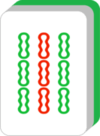
A Chow is a sequence of three consecutive tiles from the same suit. Here’s a classic example — 3, 4, 5 of bamboo:



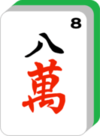
A Pung is a triplet of three identical tiles. For example, three 8-circles:

Both are valid melds and both count toward your five-block structure. But they are not equally easy to build, and they do not carry equal value in competitive Mahjong scoring. Understanding that gap is where Mahjong strategy gets genuinely interesting.
The Probability Numbers Behind Chow vs Pung Math
In a standard Mahjong set there are 136 tiles. Each individual tile exists exactly four times in the deck. When you’re holding two of the same tile and trying to complete a Pung like this:
You need one specific tile from the remaining pool. Depending on how many have already been discarded, your odds of drawing or claiming that third tile drop significantly as the round progresses — sitting around 5 to 8 percent per draw early in the round.
A Chow gives you far more flexibility. Holding a 4 and 5 of bamboo:
means you can complete your sequence with either a 3 or a 6:

That’s potentially eight completing tiles versus the Pung’s maximum of two remaining tiles. Early in a round your probability of completing a Chow with two connected tiles sits closer to 15 to 20 percent per draw — nearly double the tile efficiency of a Pung.
Even an edge wait like 1-2 bamboo still gives you one completing tile:


But a two-sided wait like 4-5 gives you two options and is always preferred:
When the Chow vs Pung Math Flips in Your Favor
Pure tile efficiency sequences favor Chows, but MCR chow combinations score far less than Pung-based hands. All Sequences — a full hand of Chows like this:



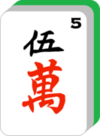


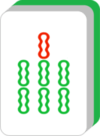


scores modestly. Compare that to All Pungs:


which scores dramatically more in a single winning hand. So the real question isn’t which is easier to build — it’s which gives you the best return on your tile investment given your current hand. A Mahjong live tile calculator helps you track live and dead tiles during practice sessions until the instinct becomes second nature.
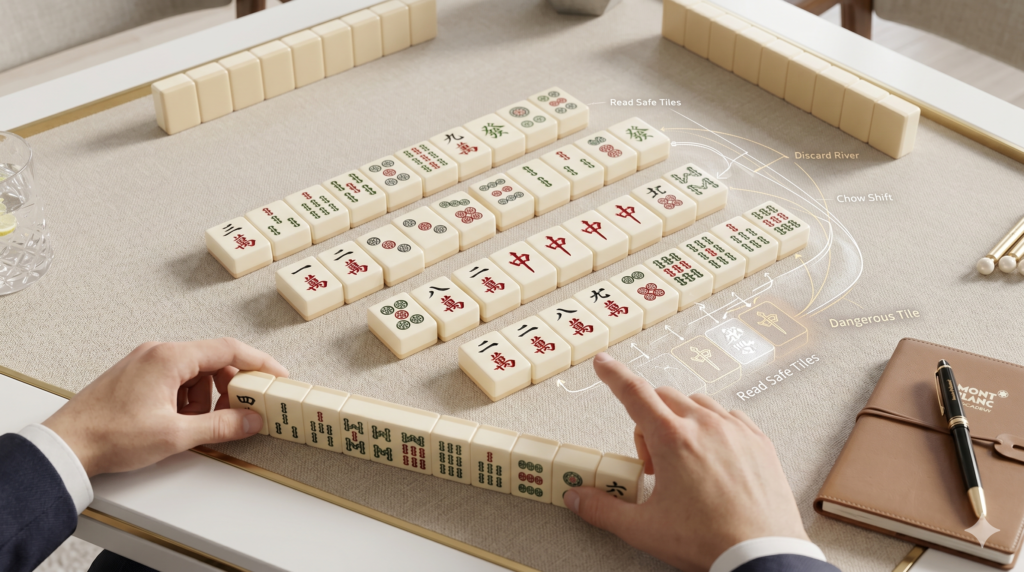
5 MCR Chow Combinations Worth Building
Not all Chows score equally in competitive Mahjong. The highest-value MCR chow combinations to target are:
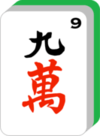
- Pure Straight — Three consecutive Chows covering 1 through 9 in the same suit:
- Mixed Straight — Same 1 through 9 sequence split across three different suits:

- Pure Shifted Chows — Three Chows in the same suit, each shifted down or up by exactly one or two numbers (e.g., 1-2-3, 2-3-4, 3-4-5):
- All Sequences — A pure speed hand consisting entirely of Chows for fast, efficient wins.
- Two Terminal Chows — A specialized structure using the extreme ends of the same suit (1-2-3 and 7-8-9) to secure crucial baseline points.
While basic Chows help complete a hand, advanced MCR players look for opportunities to combine sequences into scoring patterns such as Pure Straight, Mixed Straight, Pure Shifted Chows, All Sequences, and Two Terminal Chows. Recognizing these patterns early can improve both your tile efficiency and your scoring potential, turning ordinary sequence-based hands into competitive winning hands.
How to Apply Chow vs Pung Math at Your Table
Early in a round, default to Chow-friendly structures because tile probability strongly favors them. If you’re holding a two-sided wait like:
stay with it — the math is on your side. As the round develops, reassess your Pung candidates against the live tile count. If your target tile is still mostly live and the score justifies it, stay the course. If the tile is cold or the round is moving fast, pivot to sequences and close out quickly.
The players who understand Chow vs Pung math don’t just win more hands — they lose fewer points when things don’t go their way. They know when to push and when to fold, and that discipline is worth more than any lucky draw.
For more on building your Mahjong hand structure from the very first tile, read our guide on Five-Block Theory Mahjong.