
How to Play Mahjong: The Complete Beginner’s Guide
If you have ever watched a live game of Mahjong, you have probably been mesmerized by the beautiful click-clack of the tiles, the fast-paced shifting of hands, and the intense concentration of the players. At first glance, the game can seem like an ancient, unreadable puzzle. But here is a secret: if you have ever enjoyed card games like Rummy, you already understand the basic idea.
Learning how to play Mahjong is a journey of pattern recognition, strategic thinking, and social connection. Whether you eventually play American Mahjong, Chinese Mahjong, Japanese Riichi, or another regional variation, they all share the same fundamental concepts. This guide will demystify the game and give you the confidence to sit down at the table and begin your Mahjong journey.
Table of Contents
How to Play Mahjong in 5 Simple Steps
If you’re completely new to Mahjong, here’s the short version.
- Build a winning hand consisting of four sets and one matching pair.
- Draw one tile and discard one tile each turn.
- Create sequences or matching sets while improving your hand.
- Watch your opponents’ discards to guide your decisions.
- Declare Mahjong when your hand is complete.
Now let’s explore each step in more detail.
What Is Mahjong? Understanding How to Play Mahjong
Mahjong is a four-player strategy game that originated in China during the nineteenth century. Over time, it evolved into several popular regional styles, including Traditional Chinese, Japanese Riichi, American Mahjong, Hong Kong Mahjong, and Taiwanese Mahjong.
Although every style has its own unique scoring system and special rules, the core objective remains remarkably similar.
Your goal is to become the first player to complete a winning hand consisting of four sets and one matching pair.
Think of Mahjong as building a puzzle. Every tile you draw creates a new decision. Success comes from recognizing patterns, adapting to changing situations, and making smarter decisions than your opponents.
Unlike games driven entirely by luck, Mahjong rewards observation, planning, flexibility, and experience.
Step 1: Understanding Mahjong Tiles
Before playing your first game, you need to become familiar with the tiles.
A typical Mahjong set contains 136 to 144 tiles, depending on the style being played and whether Flower and Season tiles are included.
The three numbered suits are:
- Bamboo
- Circles
- Characters
Some American Mahjong players also refer to these suits as Bams, Dots, and Craks, so you may hear both names depending on where you play.
Example:





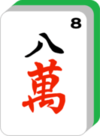
Every Mahjong set also contains Honor Tiles.
Winds




Dragons



Some Mahjong styles also include Flower and Season tiles that have special scoring or bonus functions.
Understanding the tile designs is the first step toward reading your hand quickly and making confident decisions.
Step 2: Building the Wall and Dealing Tiles
One of Mahjong’s most enjoyable traditions begins before the game even starts.
All tiles are placed face down and thoroughly mixed together across the table, creating the famous “click-clack” sound that many players affectionately call the twittering of the sparrows.
Each player then builds a double-stacked wall of tiles in front of them. The four walls are pushed together to form a square in the center of the table.
Dice are rolled to determine the dealer and where the wall will be broken before dealing begins.
Depending on the Mahjong style being played, each player usually begins with 13 tiles, while the dealer starts with 14 tiles and takes the first turn.
Step 3: Understanding the Turn Sequence
The rhythm of Mahjong is surprisingly simple.
Every turn follows the same basic routine.
- Draw one tile.
- Evaluate your hand.
- Discard one tile.
You are constantly trying to improve your hand while preventing your opponents from completing theirs.
As discarded tiles accumulate in the center of the table, they become valuable information. Experienced players watch these discards carefully because they reveal clues about what each opponent may be building.
Step 4: Claiming Discarded Tiles
Mahjong becomes much more interactive when players begin claiming discarded tiles.
If another player discards a tile that helps complete your hand, you may be allowed to claim it immediately, depending on the rules being played.
Chow
A Chow is a sequence of three consecutive tiles in the same suit.
Example:


Pung
A Pung is a set of three identical tiles.
Example:
Kong
A Kong consists of four identical tiles.
Example:

When a claimed set is completed, it is usually placed face up on the table for all players to see before play continues.
Step 5: Declaring Mahjong (Hu)
The game reaches its exciting conclusion when you complete your winning hand.
Most winning hands contain:
- Four completed sets
- One matching pair
Example:

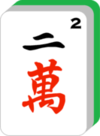
As soon as your hand is complete, declare Mahjong and reveal your tiles.
Congratulations—you have won the hand.
How to Play Mahjong: Beginner Strategy Tips
New players often focus entirely on collecting matching tiles.
Instead, try building flexible hands.
Good habits include:
- Keep several possible winning options open.
- Avoid collecting isolated tiles that do not connect well.
- Watch which tiles your opponents discard.
- Avoid committing to one strategy too early.
- Stay patient and adapt as the game develops.
The strongest Mahjong players rarely force a hand. Instead, they continuously adjust their plans as new information appears.
Common Beginner Mistakes
Every new player makes mistakes, and that’s part of learning.
The most common include:
- Holding Honor tiles long after they stop helping your hand.
- Breaking useful sequences too early.
- Ignoring the information revealed by opponents’ discards.
- Chasing difficult hands instead of easier winning opportunities.
- Focusing only on your own tiles instead of the entire table.
Recognizing these habits early will dramatically improve your game.
Which Mahjong Style Should You Learn?
One of the first questions every beginner asks is:
“Which Mahjong style should I learn?”
The good news is that there isn’t a single “best” style. Over the past century, Mahjong has evolved into several popular variations around the world, each with its own unique rules, scoring system, and traditions. While the gameplay may differ from one style to another, they all share the same core principles of pattern recognition, strategic decision-making, and hand building.
Some of the most widely played Mahjong styles include:
- Traditional Chinese Mahjong – Often considered the foundation of modern Mahjong. It emphasizes efficient hand building, flexible strategy, and relatively straightforward gameplay.
- American Mahjong – Uses the annual National Mah Jongg League (NMJL) card and introduces Jokers, the Charleston tile exchange, and predefined winning hands.
- Japanese Riichi Mahjong – A highly strategic variation featuring Riichi declarations, Dora bonus tiles, defensive play, and a sophisticated scoring system.
- Hong Kong Mahjong – A fast-paced version known for its simple rules and accessible scoring, making it a popular choice for casual and social play.
- Taiwanese Mahjong – Typically played with 16 tiles instead of 13, creating larger hands and different strategic considerations.
Although every variation has its own personality, they all teach the same essential Mahjong skills:
- Building efficient hands
- Recognizing tile patterns
- Reading your opponents’ discards
- Making smart draw and discard decisions
- Knowing when your hand is ready to win
At HeyMahjong, we focus on these universal fundamentals first. Rather than teaching a single regional ruleset from the beginning, we help you develop the core skills that make you a stronger Mahjong player regardless of which style you eventually choose.
If you’re completely new to Mahjong, don’t worry about choosing the “perfect” style. Learn the fundamentals first. Once you understand how Mahjong works, transitioning to American, Chinese, Japanese Riichi, Hong Kong, Taiwanese, or other regional styles becomes much easier.
Continue learning: Once you’re comfortable with the basics, explore our complete guide to the different Mahjong styles to discover which variation best matches your interests and playing goals.
The Fastest Way to Learn Mahjong
Reading about Mahjong is an excellent first step.
Playing is where real learning begins.
The fastest way to improve is to combine:
- Guided lessons
- Regular practice
- Reviewing completed hands
- Playing with experienced players
- Practicing with AI tools that provide instant feedback
Learning in a supportive, judgment-free environment helps build confidence much faster than memorizing rules alone.
Whether you prefer self-paced study or guided instruction, consistent practice is the key to becoming a confident Mahjong player.
How to Play Mahjong FAQs
Is Mahjong difficult to learn?
No. Most beginners understand the basic mechanics after only a few games. Mastery comes through experience.
How long does it take to become comfortable?
With regular practice, many players become confident after several guided sessions.
Do I need my own Mahjong set?
No. Many clubs, community groups, and classes provide Mahjong sets for beginners.
Which Mahjong style should I start with?
Start by learning the universal fundamentals. Once you understand how Mahjong works, exploring different styles becomes much easier.
Continue Your Mahjong Journey
Learning how to play Mahjong is only the beginning.
As your confidence grows, continue exploring:
- Mahjong Rules
- Mahjong Strategy
- Mahjong Scoring
- Mahjong Tiles
- Mahjong Glossary
- AI Companion
- Mahjong Academy
Every hand teaches something new. The more you play, the more patterns you’ll recognize, and the more enjoyable the game becomes.
Welcome to the world of Mahjong—and enjoy the journey.