
Mahjong Five-Block Theory: 5 Essential Ways to Build Better Hands
Mahjong Five-Block Theory is one of the most important beginner-friendly concepts for understanding how efficient Mahjong hands are structured and improved during gameplay.If you’ve played enough Mahjong, you’ve probably had one of those hands that feels amazing at the beginning. You look down and see connections everywhere. Multiple sequences are forming, several tiles could become useful later, and the hand feels flexible, powerful, and full of potential. Then somehow, ten turns later, you’re still nowhere near tenpai.
Most players assume they were simply unlucky, but in many cases the real problem is something much more subtle: too many blocks. This is where Five-Block Theory becomes important. Mahjong Five-Block Theory is one of the foundational ideas behind Mahjong tile efficiency because it teaches you how to break down your hand correctly, how to recognize unnecessary shapes early, and how to avoid the kind of indecision that slows down otherwise strong hands.
A standard winning Mahjong hand only needs five completed structures: four melds and one pair. That’s the entire goal. The mistake many players make is holding six or seven possible blocks because they don’t want to give anything up. Every shape feels useful, so nothing gets discarded decisively and the hand becomes crowded with competing ideas. That hesitation is often the difference between reaching tenpai first and falling behind the table.
A Single Tile Is Not a Real Block
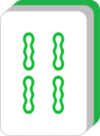
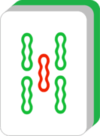
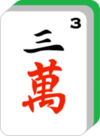
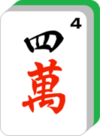
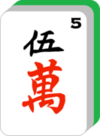
One of the most important concepts in Five-Block Theory is understanding what actually counts as structure. A single isolated tile is not a block. A block needs connection potential and at least two tiles working together toward something meaningful.
For example,


Why Mahjong Five-Block Theory Matters for Tile Efficiency
One of the interesting things about Five-Block Theory is that even experienced players struggle with it. A lot of Mahjong players spend years developing instinct and pattern recognition, but never learn how to properly decompose a hand. As a result, they rely heavily on feeling. They keep extra shapes “just in case,” delay difficult cuts, and constantly try to preserve flexibility.
Ironically, too much flexibility is often what kills the hand. Mahjong rewards commitment. Once you understand which five blocks you’re realistically building toward, your discard decisions become cleaner and faster because you stop second-guessing every tile.
That clarity creates several major advantages. First, you waste fewer draws because your hand progresses more directly toward tenpai instead of having multiple shapes competing with one another. Second, your discard pattern becomes more natural. Hesitation is surprisingly visible in Mahjong, and players who constantly change direction often reveal uncertainty through awkward discards. Finally, defense becomes easier because once you know exactly what your hand is trying to become, you also know which tiles you can safely abandon if the round becomes dangerous.
How Mahjong Five-Block Theory Improves Hand Decomposition
Mahjong Five-Block Theory is not just about counting blocks. It’s also about learning how to evaluate the hand in the right order. Strong players do not look at every tile equally. They separate the stable parts of the hand first, then compare the weaker shapes after the core structure is visible.
A useful decomposition order is:
- Completed melds
- Edge sequences
- Pairs
- Two-sided waits
- Closed waits
- Edge waits
Completed melds should be recognized first because they already solve part of the hand. If you have shapes like
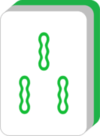

Edge sequences are also worth separating early because they are less flexible. A sequence such as


After that, identify your pair and your strongest incomplete shapes. Two-sided waits deserve special attention because they give the hand better tile acceptance. A shape like
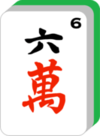
Closed waits and edge waits should usually be evaluated last. They can still be useful, especially if they are part of your clean five-block structure, but they should not be protected at the expense of stronger shapes.
The deeper point is this: hand decomposition is not about keeping every possible future alive. It is about seeing the real structure of the hand and moving steadily toward five blocks.
The Real Problem: Block Surplus
Most stalled Mahjong hands are not actually weak. In fact, many of them begin with too much potential. You might open with two pairs, several incomplete sequences, overlapping waits, and a few floating tiles that all seem capable of becoming useful later. At first glance, the hand feels rich with possibility and flexibility.
But Mahjong is not a game where unlimited flexibility automatically leads to efficiency. At some point, extra blocks stop helping and start competing with one another. The hand becomes crowded with multiple plans moving in different directions at the same time.
This is the moment where many players become paralyzed. Every discard feels painful because every tile appears to have future value. Players start thinking, “What if this shape improves later?” or “Maybe I should keep this just in case.” Instead of committing to a clean structure, they try to preserve every possible path.
Ironically, this is often what slows the hand down the most.
Five-Block Theory teaches the opposite mindset. Rather than protecting every possibility, strong players identify which five structures are realistically worth pursuing and begin cutting the surplus early. They understand that efficiency comes from commitment, not from endlessly holding optionality.
A hand that looks flexible is not always a strong hand. In many cases, the strongest Mahjong hands are the ones with the clearest direction.
Five Practical Ways to Apply Five-Block Theory
1. Count Your Blocks Early
The easiest way to improve with Five-Block Theory is to count your meaningful blocks at the very beginning of every hand. If you already see six viable structures, then you already know that a difficult cut will eventually need to happen. Simply recognizing surplus early can prevent hesitation later.
2. Compare Your Shapes Honestly
Not all blocks are equally efficient. A flexible two-sided wait usually deserves more trust than a weak edge shape or an isolated tile with vague future potential. The goal is not to preserve every possibility equally, but to identify which structures actually help the hand progress.
3. Protect Your Pair
Many players accidentally destroy their pair while chasing unnecessary upgrades elsewhere in the hand. Strong players understand that stability matters just as much as flexibility. Once you identify a likely pair candidate, treat it as part of your core structure unless there is a very strong reason to change direction.
4. Discard Surplus Blocks, Not Just Tiles
One of the biggest mindset shifts in Mahjong efficiency is learning to discard entire surplus ideas instead of simply cutting isolated tiles one by one. You are not just cleaning up random pieces of the hand. You are shaping a final structure with intention and commitment.
5. Reassess as the Hand Evolves
Good players constantly reevaluate their hand as the round develops. A weak shape on turn one may suddenly become valuable after a favorable draw. Five-Block Theory is not about blindly forcing a structure from the start. It is about continuously identifying which five blocks now give you the clearest and most efficient path forward.
Common Five-Block Mistakes
One of the most common mistakes players make is holding six blocks for too long simply because every shape feels valuable. They become emotionally attached to flexibility and hesitate to commit to a direction. As a result, the hand slows down while more disciplined players move efficiently toward tenpai.
Another frequent mistake is overvaluing isolated tiles. Players often keep disconnected honors or terminals because they imagine future improvements, even when those tiles do very little for the current hand structure. In practice, theoretical potential is often far less important than present efficiency.
Some players also break strong two-sided waits too early while preserving weaker speculative shapes. This usually happens when players focus too heavily on unlikely future upside instead of evaluating the actual acceptance value of the hand.
But perhaps the biggest mistake is relying entirely on instinct without understanding structure. Instinct absolutely matters in Mahjong, especially with experience, but structure is what creates consistency over the long run. Five-Block Theory gives players a framework for making clearer, faster, and more disciplined decisions under pressure.
Why This Concept Matters Across Mahjong Styles
Five-Block Theory applies to Chinese Mahjong, Riichi Mahjong, MCR, and many other forms of the game because it is fundamentally about efficiency.
No matter what variation you play, your hand still needs four melds and one pair.
Players who recognize clean structures earlier consistently make faster, stronger decisions.
FAQ
What is Mahjong Five-Block Theory?
Five-Block Theory is the idea that a standard Mahjong hand only needs five meaningful structures: four melds and one pair.
Why is Five-Block Theory important?
It improves hand efficiency, reduces hesitation, and helps players reach tenpai faster.
Is a single tile considered a block?
No. A single isolated tile does not have enough connectivity to function as a meaningful structure on its own.
What is hand decomposition in Mahjong?
Hand decomposition is the process of breaking your hand into meaningful structures so you can evaluate efficiency and make better discard decisions.
Why do strong-looking hands sometimes fail?
Many hands stall because players hold too many possible blocks at once instead of committing to a clean five-block structure.
The Bottom Line
Mahjong Five-Block Theory is simple, but it changes the way you see the whole hand. Instead of asking, “Which tile should I throw away?” you start asking, “What is this hand actually trying to become?” That one shift makes your decisions cleaner.
A lot of Mahjong players get stuck because they are afraid to give up potential. They keep extra shapes because each one looks like it might become useful later. But a winning hand does not need every possibility. It needs a clear path.
When you can identify your five blocks, protect the shapes that matter, and let go of the surplus, the game feels less chaotic. You stop reacting tile by tile and start building with purpose.
That is the real value of Five-Block Theory. It does not make you play smaller. It helps you play with more confidence.