Mahjong Tiles Explained: Suits, Winds, Dragons and Bonus Tiles
If you’re new to Mahjong, start with our complete guide:
How to Play Mahjong for Beginners.
Introduction
Understanding mahjong tiles explained in a clear way helps beginners learn the game much faster. Mahjong tiles form the foundation of every hand, every strategy, and every winning combination in the game.
A standard Mahjong set contains several tile groups: number tiles (the three suits), honor tiles (Winds and Dragons), and optional bonus tiles such as Flowers and Seasons. Once you recognize these tile families, it becomes much easier to read the table and build stronger hands.
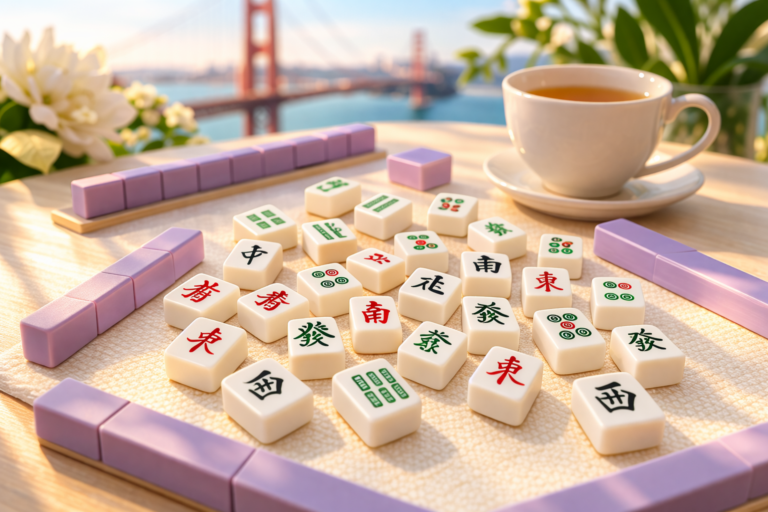
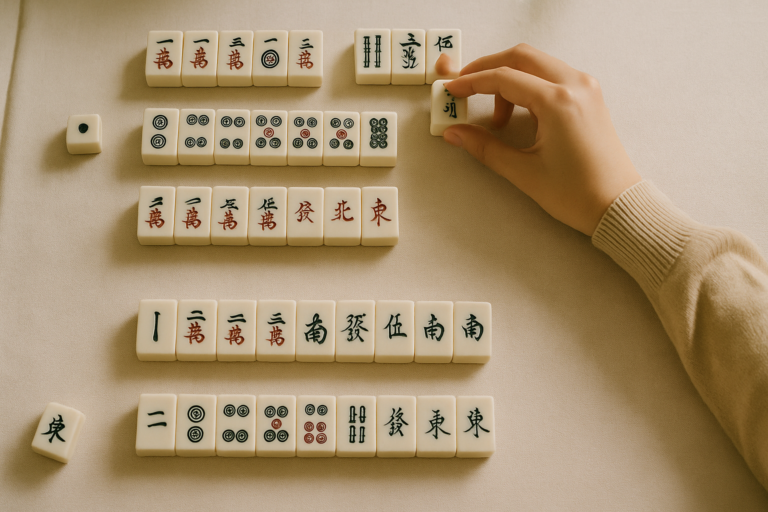
This visual guide explains the main Mahjong tile groups with simple examples so you can quickly identify them during a game.
Mahjong Tiles Explained: Number Tiles (Suits)
Number tiles are the most common tiles used in Mahjong. They come in three suits and are numbered from 1 to 9. These tiles form most sequences and combinations during gameplay.
Dots (Circles)
Dots, also called circles, use round symbols and are usually the easiest suit for beginners to recognize.









Because dot tiles form clear visual patterns, many beginners find it easier to identify sequences with them.
Bamboo (Sticks)
Bamboo tiles are represented by stylized bamboo stalks.









These tiles frequently appear in sequences and are often part of flexible hand-building strategies.
Characters (Wan)
Character tiles display the Chinese character “萬,” representing numbers from one to nine.
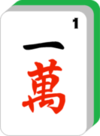
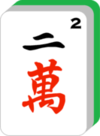
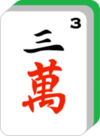
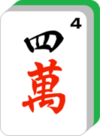
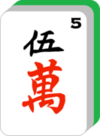
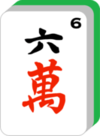
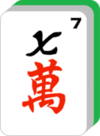
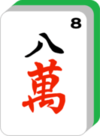
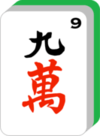
Although they may look more complex at first, character tiles behave exactly like the other two suits when forming sequences and sets.
Mahjong Tiles Explained: Honor Tiles
Honor tiles represent special categories that do not follow numerical sequences. Instead, they typically form triplets or quads.
Wind Tiles
There are four wind tiles in Mahjong:




These represent the four directions:
East
South
West
North
Wind tiles can form triplets and may provide extra points depending on the rule set being played.
Dragon Tiles
Dragon tiles are another type of honor tile and often appear in higher-scoring hands.



These represent:
Red Dragon
Green Dragon
White Dragon
Triplets of dragon tiles often increase the value of a hand.
Mahjong Tiles Explained: Bonus Tiles
Some Mahjong sets include optional bonus tiles known as Flowers and Seasons.
These tiles usually appear once each and provide small scoring bonuses when drawn. Unlike other tiles, they are typically set aside immediately and replaced with another tile from the wall.
Bonus tiles do not form standard melds but add variety and scoring opportunities depending on the Mahjong style being played.
For a neutral reference explaining Mahjong tile families and history, you can also see the Mahjong tile overview on Wikipedia.
Recognition Tips for Beginners
Recognizing Mahjong tiles quickly helps players make better decisions during each turn.
Group tiles mentally by suit when organizing your hand. This makes it easier to spot sequences such as:
Middle numbers like 4, 5, and 6 tend to form the most flexible sequences, so learning to identify them quickly can improve your hand-building strategy.
Honor tiles should also be recognized instantly because they often influence scoring and defensive play later in the game.
If you want to see how these tiles are used in real gameplay, our online Mahjong classes walk through examples of sequences, triplets, and winning hands.
Learn Mahjong Faster with a Cheat Sheet
Download the Free Mahjong Cheat Sheet to quickly learn the tiles, basic hands, and beginner strategies.
Join a Beginner Mahjong Class
Learning Mahjong is much easier with guidance and real gameplay. Our Beginner Mahjong Classes introduce the tiles, hand structures, and game flow step by step in a friendly environment.
Continue Learning with Mahjong Academy
For structured lessons, deeper strategy explanations, and guided practice, explore the Mahjong Academy.
Next Step
Now that you understand the Mahjong tiles, the next step is learning how these tiles combine into winning hands.
Continue with: