Chinese vs Japanese vs American Mahjong: 7 Key Differences Explained (Clear Beginner Guide)
Chinese vs Japanese vs American Mahjong – Why These Styles Matter
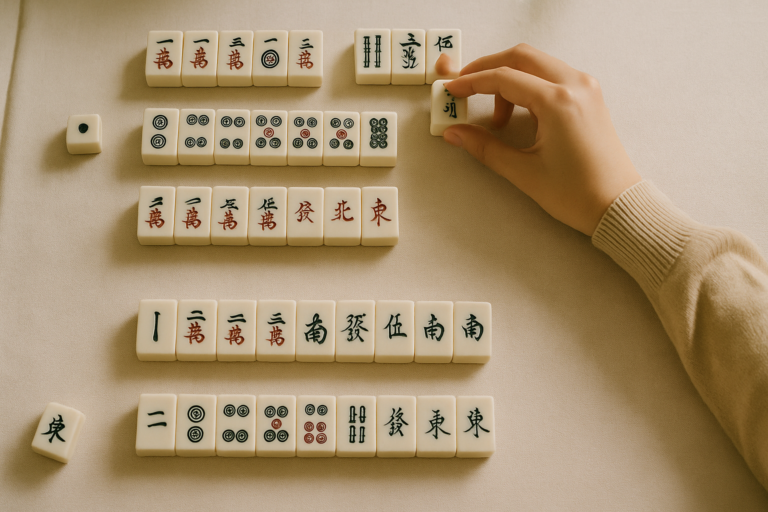
Chinese, Japanese Riichi, and American Mahjong all share the same tile foundation but differ in rules, scoring, and gameplay culture. These variations developed over time as Mahjong spread across different regions. For a neutral reference explaining the global history of the game, see the Mahjong overview on Wikipedia.
This guide breaks down the essential differences so you can choose your ideal starting point.
1. Tile Set Differences
Each version uses a different number of tiles, shaping gameplay and complexity.
Chinese Mahjong – 136 or 144 Tiles
- 3 suits + Winds + Dragons
- Optional Flowers/Seasons
- No Jokers
Japanese Riichi Mahjong – 136 Tiles
- No Bonus Tiles
- May include red fives (bonus tiles)
- Stricter hand structure
American Mahjong – 152 Tiles
- Uses Jokers
- Uses Bams, Craks, and Dots
- Flowers and Dragons included
- Largest tile set
Impact: American Mahjong is wildcard-friendly, Riichi is strict, Chinese is the most universal.
2. Structure of a Winning Hand
Chinese Mahjong
- 4 melds + 1 pair
- Sequences allowed







Japanese Riichi Mahjong
- 4 melds + 1 pair
- Must meet yaku requirements
- Preferred closed hand play
American Mahjong
- Hands must match the annual card
- Jokers allow flexible set formation
3. Scoring Systems
Chinese Mahjong
Simplified scoring with base points and bonuses.
Japanese Riichi Mahjong
- Han + Fu scoring
- Dora bonuses
- Riichi bets and penalties
American Mahjong
Fixed hand values based on the annual card.
4. Calling Tiles (Open vs Closed Play)
Chinese allows both styles, Riichi rewards concealed play, and American encourages open calling due to Jokers.
5. Special Rules
Chinese Mahjong
Minimal extras; Flowers optional.
Japanese Riichi Mahjong
- Riichi declaration
- Dora indicators
- Furiten restrictions
American Mahjong
- Charleston exchange
- Joker substitutions
- New card every year
6. Game Pace
- Fastest: Japanese Riichi
- Steady and strategic: Chinese
- Slowest: American (card referencing)
7. Difficulty for Beginners
| Version | Beginner Friendly | Reason |
|---|---|---|
| Chinese Mahjong | Easiest | Universal, simple scoring |
| Japanese Riichi | Moderate | Yaku complexity |
| American Mahjong | Most complex | Card + Jokers + rules |
Which Style Should You Learn First?
Most players start with Chinese Mahjong because it teaches fundamentals that transfer to every ruleset.
- Tile efficiency
- Meld recognition
- Table reading
- Risk timing
Learn Mahjong Faster with a Cheat Sheet
Download the Free Mahjong Cheat Sheet to quickly learn the tiles, basic hands, and beginner strategies.
Join a Beginner Mahjong Class
Learning Mahjong is much easier with guidance and real gameplay. Our Beginner Mahjong Classes introduce the tiles, hand structures, and game flow step by step in a friendly environment.
Continue Learning with Mahjong Academy
For structured lessons, deeper strategy explanations, and guided practice, explore the Mahjong Academy.