Mahjong Night Ideas: How to Host a Calm, Social Evening at Home
- Mahjong nights work best when the focus is on ease and conversation rather than performance
- Small group size, simplified setup and pacing shape the experience more than rules
- A calm Mahjong night encourages people to return without feeling intimidated
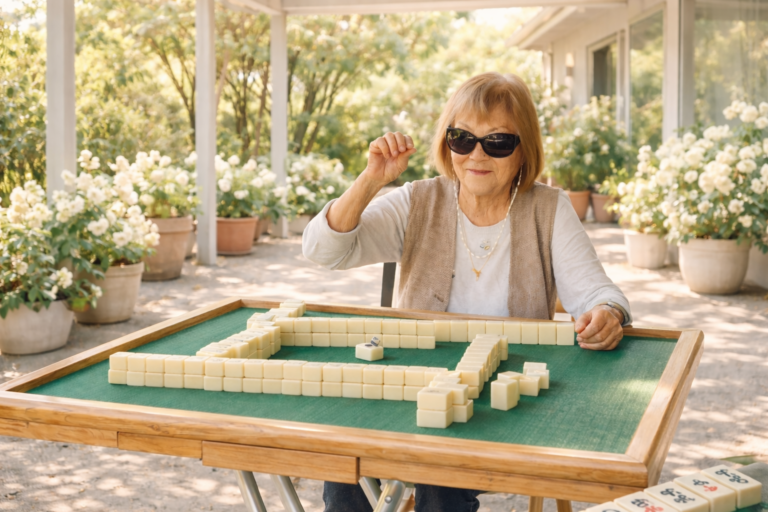
Mahjong night ideas often bring to mind long tables, complicated rules, and experienced players moving quickly through hands. In reality, hosting Mahjong at home can be simple, welcoming, and relaxed — even when everyone at the table is still learning.
A successful Mahjong night is less about technical mastery and more about creating an environment where people feel comfortable sitting down, asking questions, and staying engaged without pressure.
Start with a clear intention
Before inviting anyone over, decide what kind of Mahjong night you want to host. Is it a casual introduction to Mahjong? A quiet social evening? A learning-focused session for beginners?
Setting a clear intention helps everyone relax. When guests know that the goal is simply to explore the game together, there is less pressure to perform or “play correctly.” This clarity also helps you simplify decisions around setup, pacing, and structure.
For beginner-friendly Mahjong nights, it’s best to focus on conversation, observation, and familiarity rather than completing full games quickly.
Keep the group small and comfortable
Mahjong works best in small groups. Four players is ideal, but three with rotation can work just as well. Smaller groups allow space for questions and make it easier for everyone to follow the flow of play.
Avoid hosting Mahjong as a large group activity. When too many people are watching or waiting, the game can start to feel like a demonstration rather than a shared experience. A calm, intimate setting encourages participation and learning.
Simplify the setup
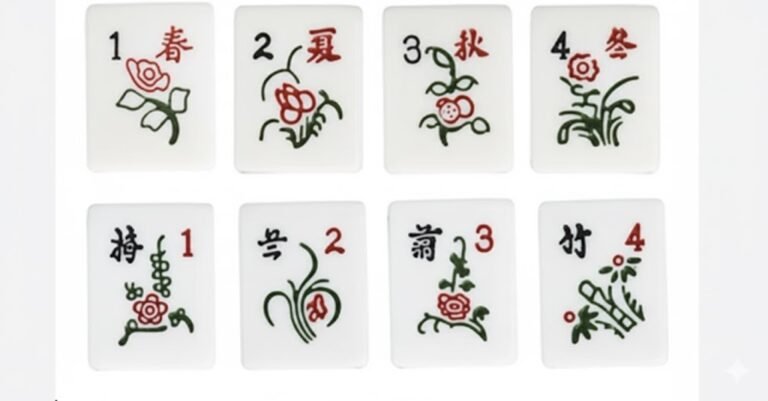
One of the most effective Mahjong night ideas for beginners is to simplify the game itself. Remove optional elements like flower tiles if your guests are new. Focus on the three main suits and basic discarding.
This approach allows everyone to concentrate on recognizing tiles and understanding turn order without feeling overwhelmed. Mahjong has always adapted to its setting, and simplifying the setup is part of that tradition.
Mahjong’s long cultural history shows that the game has evolved across regions and households, shaped by the people who play it.
Create a welcoming atmosphere
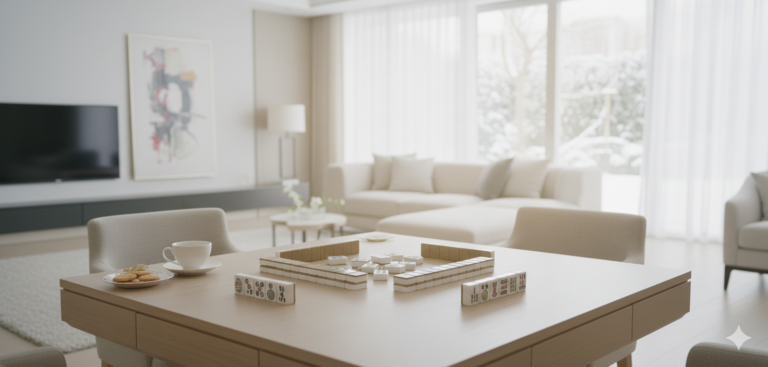
Atmosphere plays a larger role than many hosts expect. Soft lighting works better than bright overhead lights, helping the table feel relaxed rather than exposed. Comfortable chairs allow guests to stay engaged longer without fatigue.
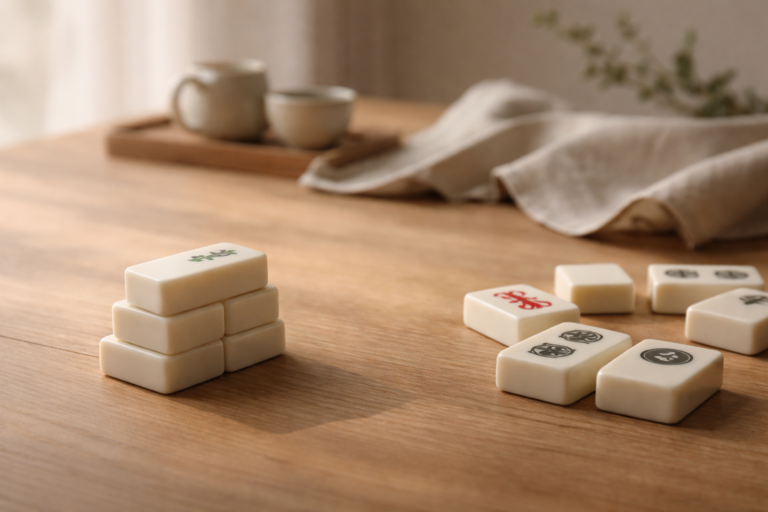
Keep background noise minimal. Mahjong does not need music or additional entertainment. The sound of tiles and conversation is part of the experience. When the environment is calm, attention naturally settles at the table.
Simple refreshments work best. Tea, water, or light snacks that don’t interrupt play help support the gathering without distracting from it.
Encourage conversation, not performance
A good Mahjong night feels social, not evaluative. Encourage guests to ask questions and take their time. There is no need to correct every move or rush the game forward.
When people feel supported rather than judged, they engage more fully. Mahjong becomes something shared rather than something to get right. This atmosphere makes guests far more likely to return for future gatherings.
End while energy is still good
A Mahjong night does not need a dramatic ending. One or two hands may be enough, especially for beginners. Ending while energy is still positive leaves guests feeling satisfied rather than tired.
For those interested in learning Mahjong in a modern context, hosting small, thoughtful gatherings is one of the most natural ways to introduce the game. A calm Mahjong night builds familiarity, confidence, and connection — all without pressure.