How to Choose a Mahjong Table Setup for Practice
A good practice table doesn’t need to be fancy. It just needs to feel stable, comfortable, and consistent every time you sit down. The right setup helps you build better tile control, cleaner discards, and a more relaxed practice routine.
Below are the three setups players use most often, with photos for easy comparison.
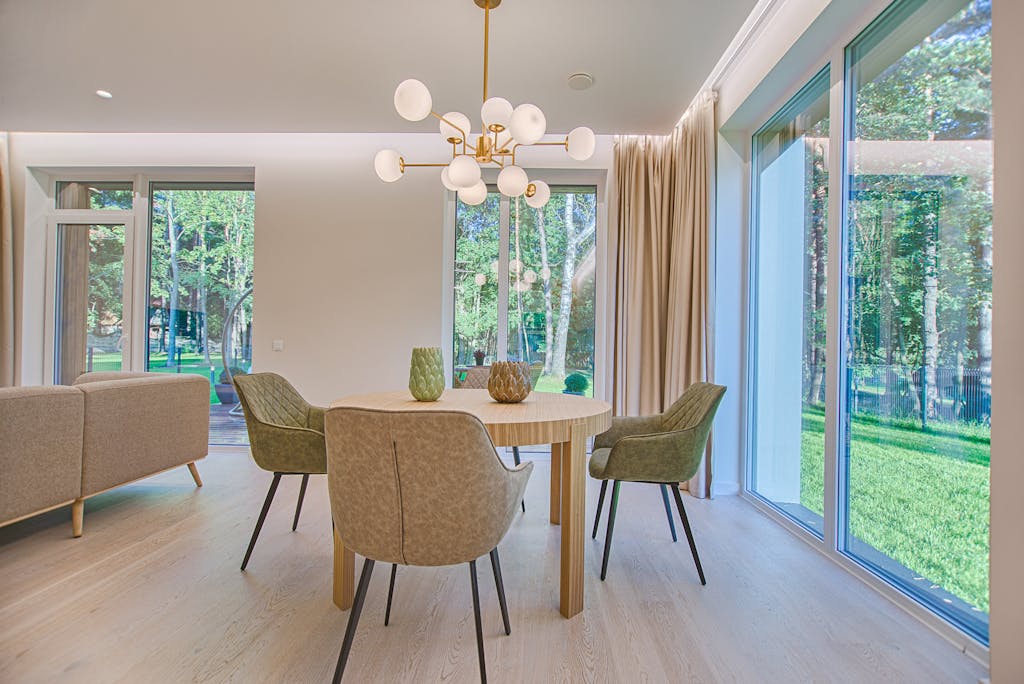
Option 1: Standard Dining Table
A dining table is the most common (and usually the best) practice surface.
Why it works well
- Plenty of space for tiles, walls, and discards
- Stable and sturdy
- Normal chair height supports good posture
- Easy to set up and clean up
Potential drawback
- Hard surfaces can be a little noisy without a mat
- Some tables have edges that catch tiles when shuffling
Example
A simple wooden dining table—perfectly fine for practice:
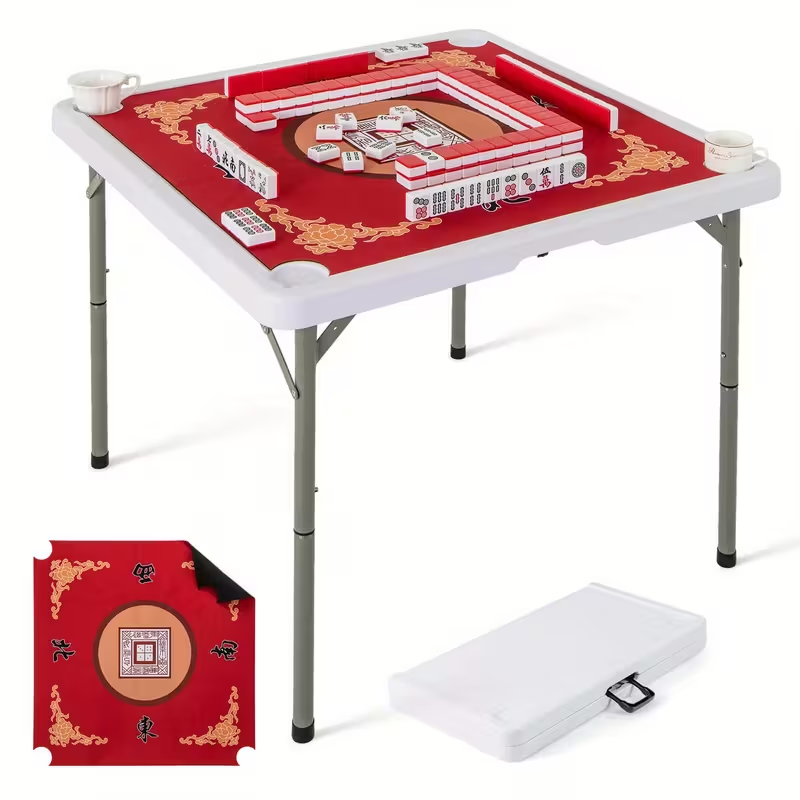
Option 2: Foldable Card Table
Great for small apartments, travel, or temporary setups.
Why it works
- Lightweight
- Easy to store
- Easy to move around
- Just big enough for four players
Potential drawbacks
- Some models wobble
- Thin tabletops may cause tiles to slide
- You’ll definitely want a mat on top
Example
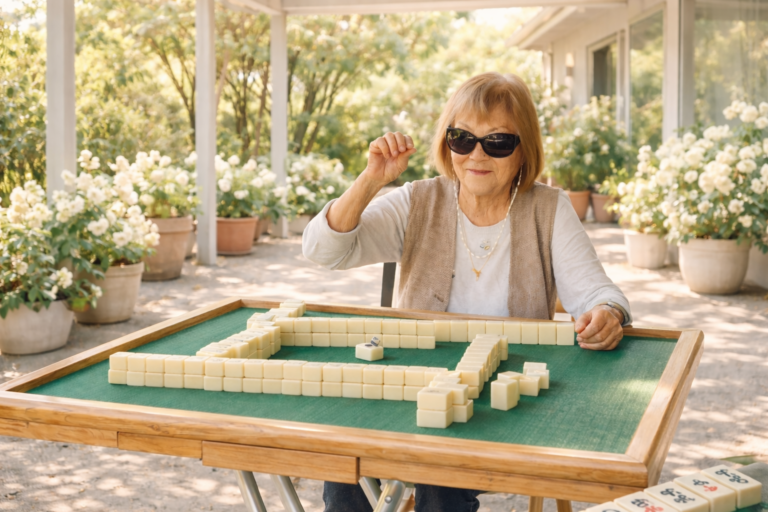
Classic green foldable card table—portable and functional:
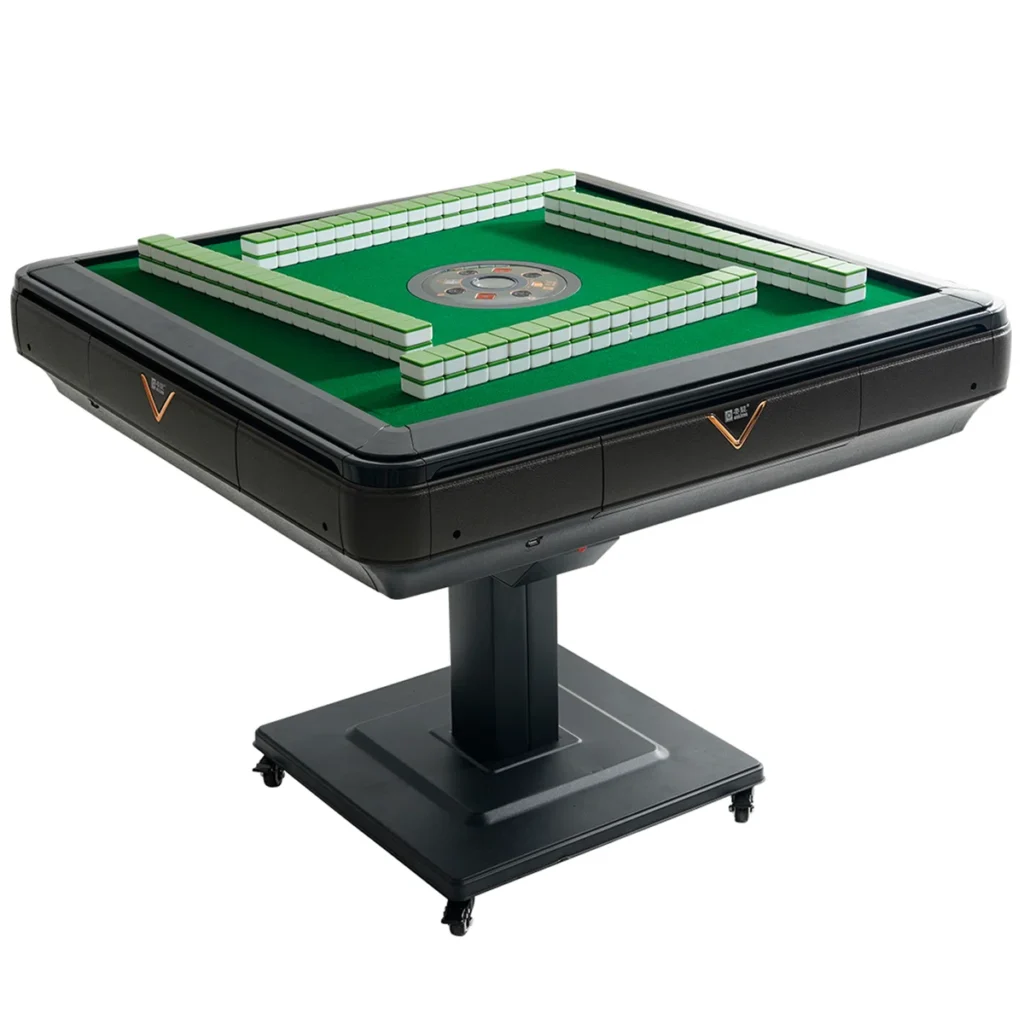
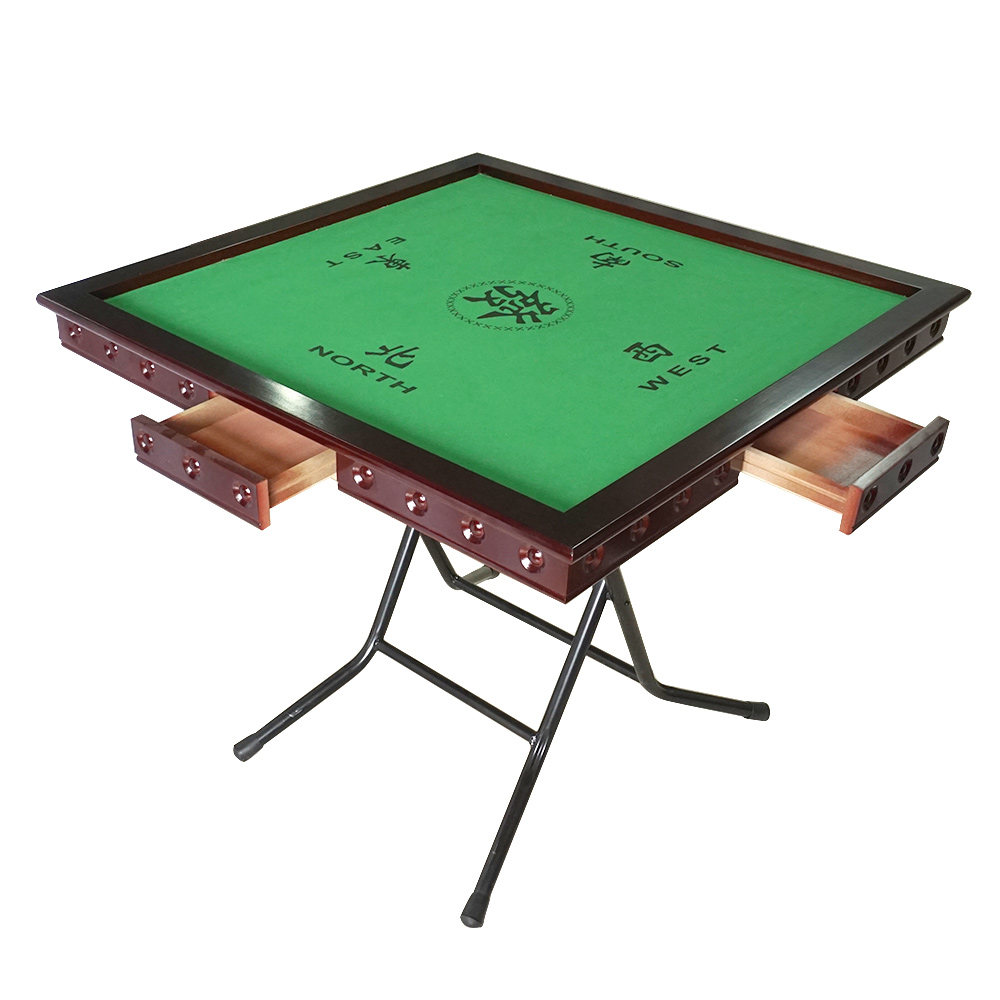
Option 3: Dedicated Mahjong Table
These range from simple felt-topped tables to high-end automatic shuffling tables.
Why it works
- Purpose-built for tiles
- Felt or microfiber top creates excellent tile control
- Rounded edges are comfortable for long sessions
- Feels immersive and stable
Potential drawbacks
- Large footprint
- More expensive
- Automatic tables are unnecessary for beginners
Example
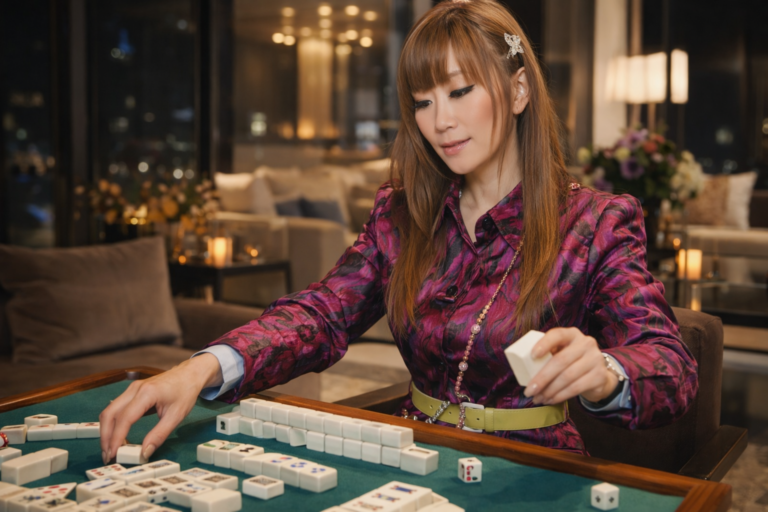
A basic non-automatic Mahjong table with a soft surface:
More Depth: What Actually Matters Most
1. Surface friction > table type
The surface is more important than the table itself.
A soft mat:
- absorbs sound
- helps tiles stay in place
- protects the table
- makes shuffling smoother
A $15–$30 mat can completely transform your experience.
2. Chair height
Your arms should rest comfortably at table height.
- Too low: you lean forward → tile control gets sloppy
- Too high: your wrists get tight → discards become stiff
If needed, raise your chair slightly or add a firm cushion.
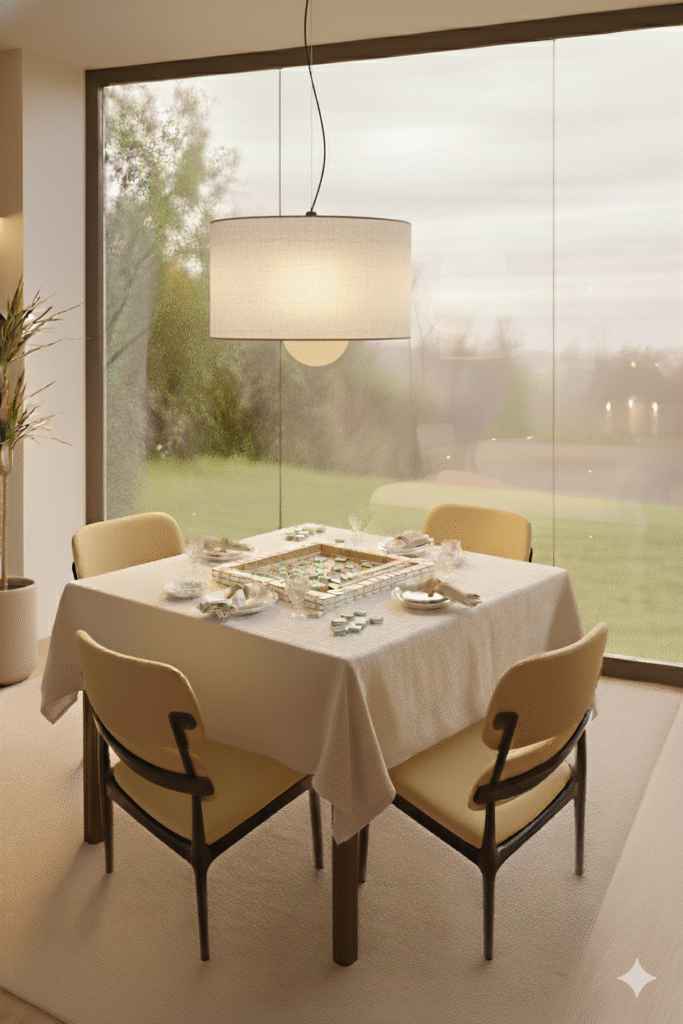
3. Lighting
Good lighting makes you read tiles faster and with less strain.
Best setup:
- one warm lamp
- angled slightly to the side
- no overhead glare
If the tiles reflect light, rotate the lamp or soften it with a shade.
4. Noise preference
Tile clicking can feel elegant — or annoying.
If you prefer quiet practice:
- choose a soft mat
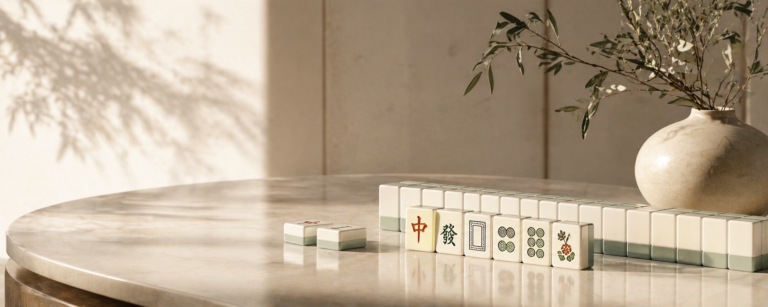
- avoid glass or stone surfaces
- use medium-weight tiles instead of extra-thick ones
Why all of this matters
Your practice environment shapes your playing habits.
A clean, comfortable setup trains:
- steadier tile handling
- smoother discards
- better focus
- more consistent decision-making
When your table feels good, your game improves faster.