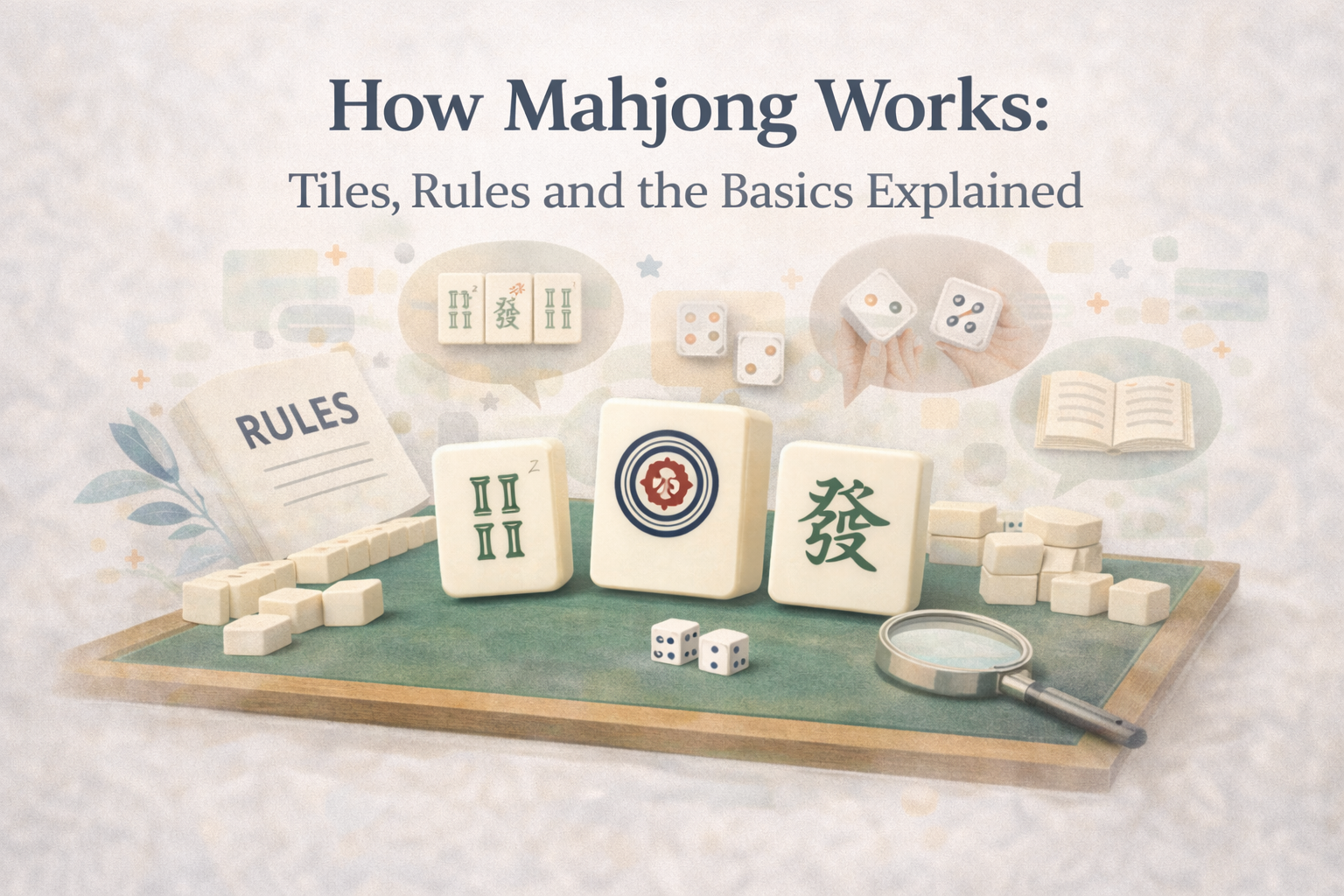
How Mahjong Works: Tiles, Rules and the Basics Explained
If you’re new to Mahjong, start with our complete guide:
How to Play Mahjong for Beginners.
Introduction
How Mahjong works can seem confusing at first, especially for beginners who are seeing the tiles and rules for the first time. However, once you understand the basic structure of the game, Mahjong becomes much easier to follow and enjoy.
In this guide, we explain how Mahjong works by covering three key ideas: the tiles used in the game, the structure of a winning hand, and the basic flow of a round. Once these fundamentals are clear, you will be able to watch or join a Mahjong game with much more confidence.
1. How Mahjong Works: Building a Winning Hand
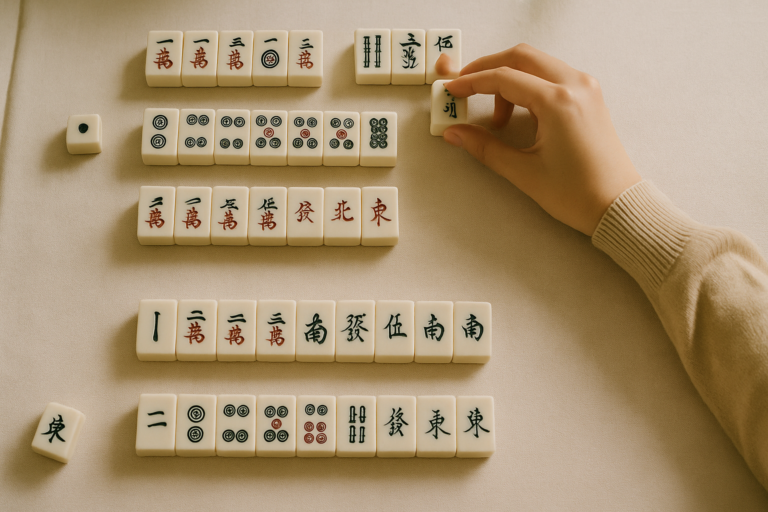
Most Mahjong versions share one universal idea: you’re building a 14-tile winning hand made from small building blocks.
A typical finished hand consists of:
- 4 melds (groups of three or four tiles)
- 1 pair (two identical tiles)
Example:






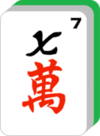
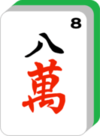
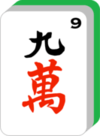


Melds may be:
- Three identical tiles
- Four identical tiles
- A sequence of three tiles in the same suit (in rule sets that allow sequences)
Mahjong is ultimately a balance of craft and intuition — shaping your own hand while staying aware of what others are building.
2. The Tiles (with exact counts)
A standard Mahjong set contains 144 tiles, divided into suits, honors, and optional bonus tiles. The exact tile types may vary slightly by ruleset, but the structure below is one of the most widely used.
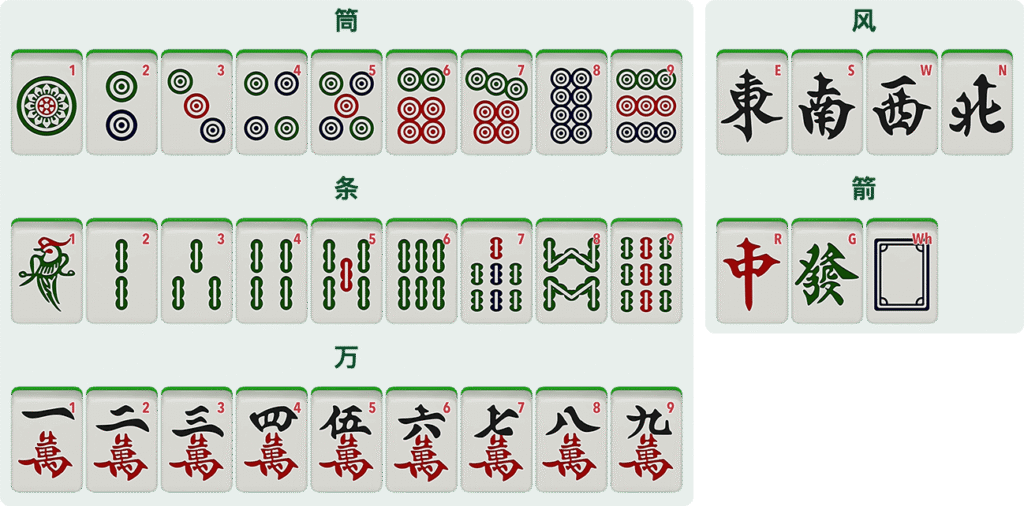
Suit Tiles — 108 tiles total
There are three suits, each containing tiles numbered 1 through 9, with four copies of each tile.
- Suit A: 1–9 (4 copies each) → 36 tiles
- Suit B: 1–9 (4 copies each) → 36 tiles
- Suit C: 1–9 (4 copies each) → 36 tiles
Suits form the backbone of most melds and sequences.
Honor Tiles — 28 tiles total
Honors represent special categories that do not follow numerical sequences.
- Wind tiles — 16 tiles
- Four winds, four copies of each



- Dragon tiles — 12 tiles
- Three dragon types, four copies of each


Honor tiles typically form sets rather than sequences.
Bonus Tiles — 8 tiles (optional)
Some Mahjong styles include bonus tiles:
- 4 Flowers
- 4 Seasons
These are single-copy tiles that offer small scoring bonuses and are often set aside immediately when drawn.
Why tile recognition matters
Learning to quickly identify suits, honors, and terminals (1s and 9s) speeds up your decision-making dramatically. The faster you can “read” the tiles, the easier the game feels.
3. The Goal of the Game
Most Mahjong versions consider a hand complete at 14 tiles.
A standard winning hand consists of:
- Four melds
- One pair
Now that you understand how Mahjong works, you can start recognizing tile patterns and building stronger hands during real games.
Why Understanding How Mahjong Works Matters
Learning how Mahjong works helps new players feel more comfortable joining real Mahjong games. Once you understand the tiles, the turn structure, and the basic winning pattern, the game becomes much easier to follow.
Many beginners find that the game becomes clearer once they recognize tile patterns such as sequences and triplets.




If you want to explore the tile system in more detail, you can also read the guide on Mahjong tiles explained. Understanding these tile groups will make it easier to recognize potential winning combinations during play.
With practice, recognizing these patterns becomes faster and you will start building stronger Mahjong hands naturally.
More about Mahjong can be found on Wikipedia.
Learn Mahjong Faster with a Cheat Sheet
Download the Free Mahjong Cheat Sheet to quickly learn the tiles, basic hands, and beginner strategies.
Join a Beginner Mahjong Class
Learning Mahjong is much easier with guidance and real gameplay. Our Beginner Mahjong Classes introduce the tiles, hand structures, and game flow step by step in a friendly environment.
Continue Learning with Mahjong Academy
For structured lessons, deeper strategy explanations, and guided practice, explore the Mahjong Academy.
Now that you understand the basics, explore the next article in our Mahjong 101 series:
-> Understanding Mahjong Tiles: Suits, Winds, and Dragons