Chinese Mahjong Terminology: Essential Terms Every Player Should Know
Originally published in Mahjong Academy. If you’re new to Mahjong, start with our complete guide:
How to Play Mahjong for Beginners.
Introduction
Chinese mahjong terminology is essential for anyone learning to play Mahjong confidently. Mahjong has its own vocabulary, and new players often hear terms like chow, pong, kong, winds, and dragons during gameplay.
Understanding chinese mahjong terminology helps players follow the flow of the game, recognize tile combinations, and communicate clearly with other players at the table. This guide introduces the essential chinese mahjong terminology every player should know, from tile names and sets to common gameplay terms.
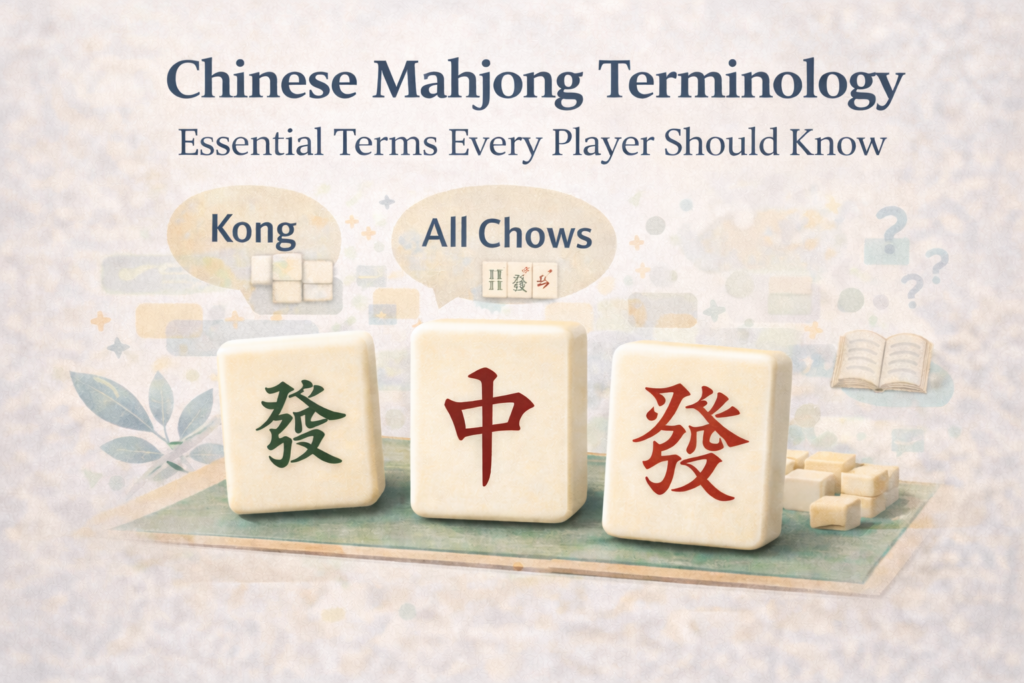
1. Chinese Mahjong Terminology: Tile Types
Understanding Chinese Mahjong terminology helps new players follow the game more easily. Many Mahjong terms describe specific tile combinations, player actions, and important parts of the gameplay.
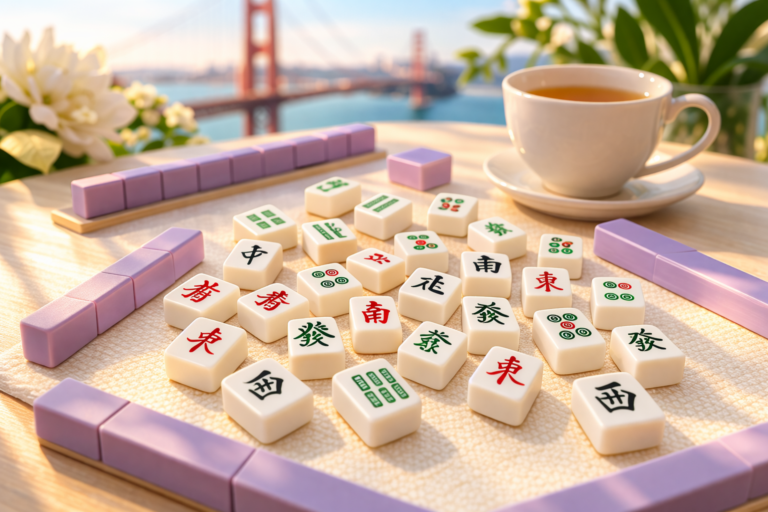
Chinese mahjong terminology often begins with understanding the main tile categories used in the game. Mahjong tiles are divided into suits and honor tiles.
Suit tiles include the three numbered families:
Suit Tiles
Mahjong uses three suits of numbered tiles (1–9):
- Dots (or Circles, 筒子 – tóng zi) – circular patterns resembling coins.









- Bamboo (条子 – tiáo zi) – bamboo sticks representing strings of coins.









- Characters (万子 – wàn zi) – Chinese numerals with the character “萬 (wan).”
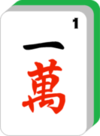
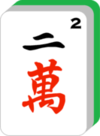
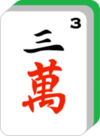
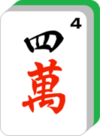
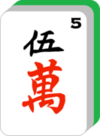
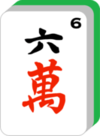
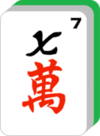
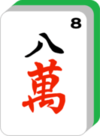
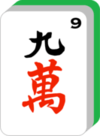
Each suit has four copies of each number tile, forming the core of the game.
Honor Tiles
These have no numbers and add character to Mahjong scoring.
- Winds (风牌 – fēng pái): East, South, West, North.
- Dragons (三元牌 – sān yuán pái): Red (中 zhōng), Green (發 fā), White (白板 bái bǎn).
Honor tiles often carry higher scoring potential and symbolic meaning.
Bonus Tiles
Optional Flowers (花牌 – huā pái) and Seasons (季牌 – jì pái) give small scoring bonuses when drawn.
2. Core Gameplay Terms
Wall (牌墙 – pái qiáng)
At the start of each round, all 144 tiles are stacked into a square wall two tiles high.
Players draw from this wall during the game.
Hand (手牌 – shǒu pái)
The tiles a player currently holds — typically 13 tiles, plus one extra during their turn.
Draw (摸牌 – mō pái)
Taking the next tile from the wall.
Discard (打牌 – dǎ pái)
Placing one tile face up on the table to end your turn.
Call (吃 / 碰 / 杠 – chī / pèng / gàng)
Claiming another player’s discard to form a combination:
- Chow or Chi (吃 chī): sequence of three consecutive tiles in one suit.
- Pung (碰 pèng): three identical tiles.
- Kong (杠 gàng): four identical tiles.
Only the player to your left can give you a tile for a chow, but anyone’s discard can be used for a pung or kong.
Mahjong (胡牌 – hú pái)
Declaring victory when you complete a legal hand: four melds and one pair (14 tiles).
3. Hand Components
| Term | Meaning | Example |
|---|---|---|
| Meld (面子 – miàn zi) | A set of tiles forming a chow, pung, or kong. | 3-4-5 Bamboo; Red Dragon ×3. |
| Pair (将牌 – jiāng pái) | Two identical tiles. | 5 Characters ×2. |
| Concealed (暗 – àn) | Meld formed entirely from your own draws (kept hidden). | Hidden melds in hand. |
| Exposed (明 – míng) | Meld completed using another player’s discard (revealed on table). | Open melds on the table. |
Tip: A standard winning hand in Chinese Mahjong consists of four melds and one pair — 14 tiles total.
4. Game Flow and Table Terms
Dealer (庄家 – zhuāng jiā)
The East Wind player who starts the round. Dealer keeps the position if they win.
Round (圈 – quān)
A complete cycle of four hands, one for each Wind direction.
Turn Order
Play proceeds counterclockwise: East → South → West → North.
Discard Pile (弃牌 – qì pái)
The area where each player’s discarded tiles are placed in front of them.
Dead Wall (死牌 – sǐ pái)
Tiles set aside for replacement draws when players declare kongs.
5. Scoring Terms
Fan (番 – fān)
A “fan” is a scoring multiplier awarded for special hand features — the higher your fan count, the higher your score.
Base Points (底分 – dǐ fēn)
Starting score used before multiplying by fans.
Self-Draw (自摸 – zì mō)
Winning on a tile you draw yourself, not from another player’s discard.
Limit Hand (封顶番 – fēng dǐng fān)
A high-value hand that reaches the maximum allowed fans in a round.
6. Table Etiquette and Communication
- Calling “Pung,” “Kong,” or “Chi” aloud is required to claim a discard.
- Announce “Hu” (胡) when you win.
- Handle tiles gently and keep your discards organized.
These habits make play smooth and respectful.
7. Summary Table: Common Chinese Mahjong Terms
| English Term | Chinese | Pronunciation | Description |
|---|---|---|---|
| Mahjong | 麻将 | má jiàng | The game itself. |
| Chow | 吃 | chī | Sequence of three consecutive tiles in the same suit. |
| Pung | 碰 | pèng | Three identical tiles. |
| Kong | 杠 | gàng | Four identical tiles. |
| Pair | 将 | jiāng | Two identical tiles (eyes). |
| Fan | 番 | fān | Scoring multiplier for special hand patterns. |
| Wall | 牌墙 | pái qiáng | The stacked tiles from which players draw. |
| Discard | 打牌 | dǎ pái | A tile thrown out at the end of a turn. |
| Self-draw | 自摸 | zì mō | Winning with a tile you draw yourself. |
Why Chinese Mahjong Terminology Matters
Learning Chinese mahjong terminology helps players understand Mahjong strategy, follow conversations at the table, and recognize common tile patterns more quickly. Once you understand Chinese Mahjong terminology, it becomes much easier to follow Mahjong strategy discussions and recognize patterns during gameplay.
Students often learn Chinese Mahjong terminology more quickly when studying structured online Mahjong classes that explain real gameplay situations.
For a neutral overview of Mahjong history and terminology, you can also read the Mahjong article on Wikipedia.
Learn Mahjong Faster with a Cheat Sheet
Download the Free Mahjong Cheat Sheet to quickly learn the tiles, basic hands, and beginner strategies.
Join a Beginner Mahjong Class
Learning Mahjong is much easier with guidance and real gameplay. Our Beginner Mahjong Classes introduce the tiles, hand structures, and game flow step by step in a friendly environment.
Continue Learning with Mahjong Academy
For structured lessons, deeper strategy explanations, and guided practice, explore the Mahjong Academy.